You're Qualified For The Job... But Not Getting Offers.
Learn The 4-Step Interview System That Gets You Hired
Stop walking out of interviews thinking "I have no idea if I got that." Take control of the conversation, focus on what actually matters, and walk out knowing exactly where you stand—even if you usually second-guess yourself or freeze up under pressure.
Developed by a recruiter with 30+ years of real hiring experience and $20,000+ commissions on the line—this isn't theory. It's a step-by-step system built from thousands of successful interviews and designed to finally eliminate that "I'm not sure" feeling that kills opportunities.

You Walk Out Of The Interview. Someone Asks "How'd It Go?"
You pause.
"I... I'm not sure."
That feeling. You know it, don't you?
Here's what's actually happening: You KNOW you can do the job. You've got the experience. The qualifications. You've proven yourself in similar roles before.
But you keep getting rejected for positions you're completely qualified for.
And the worst part? You have absolutely no idea what you're doing wrong.
Let Me Paint A Picture.
Tell Me If This Sounds Familiar.
You get the interview for a role that seems perfect. Good compensation, uses skills you have, aligns with your experience.
You prepare thoroughly. Study the company. Review your past projects. Update your resume. You show up ready.
The interview starts. The hiring manager seems... scattered. They ask about one skill. Then they jump to a behavioral question. Then back to technical details. Then something about teamwork.
You're answering everything. Demonstrating your knowledge. Hitting all the points from the job description.
But something feels off. Like you're both having different conversations.
By the end, you shake hands. They say "We'll be in touch." You walk to your car thinking "Did I get it? I have no idea."
Three days later: "We've decided to move forward with another candidate."
And you're sitting there, completely baffled. You KNOW you could do
that job well.

Let Me Paint A Picture.
Tell Me If This Sounds Familiar.
You get the interview for a role that seems perfect. Good compensation, uses skills you have, aligns with your experience.
You prepare thoroughly. Study the company. Review your past projects. Update your resume. You show up ready.
The interview starts. The hiring manager seems... scattered. They ask about one skill. Then they jump to a behavioral question. Then back to technical details. Then something about teamwork.
You're answering everything. Demonstrating your knowledge. Hitting all the points from the job description.
But something feels off. Like you're both having different conversations.
By the end, you shake hands. They say "We'll be in touch." You walk to your car thinking "Did I get it? I have no idea."
Three days later: "We've decided to move forward with another candidate."
And you're sitting there, completely baffled. You KNOW you could do
that job well.
Here's What Really Burns
While you're getting that rejection email, someone with LESS experience than you, maybe even fewer credentials, just accepted an offer for that same type of role somewhere else.
How? What do they know that you don't?
My name is Thomas Breen. I've been a recruiter for over 30 years. I've placed thousands of professionals into well-paying roles across multiple industries.
But more importantly: I don't get paid unless my candidates get hired.
Zero salary. Pure commission. That's $15,000 to $25,000 per placement.
When someone I'm representing walks out saying "I'm not sure" and then gets rejected, I just lost $20,000.
So about 10 years into my career, when I kept hearing that same phrase over and over, I got obsessed with figuring out what was actually happening in these interviews.
What I Discovered Changed Everything
I started doing something different. After every interview, I'd call both sides.
First, my candidate: "Hey, how'd it go?"
"I'm not sure, Tom. I mean, I think I answered everything well. Talked about my experience at that project, my background in the field... But I just... I don't know."
Then I'd call the hiring manager: "What'd you think of the candidate?"
"Yeah, they seem qualified. Good background. But I'm not sure if they're the right fit. I don't know, Tom. Let me think about it."
Both sides uncertain. Both sides confused. And me losing $20,000 in commissions.
This kept happening. Interview after interview. Qualified candidates. Decent conversations. Zero clarity.
Then one day it hit me.
I was reviewing a job description for a senior position. Fifteen requirements listed. Everything from specific technical skills to soft skills to experience levels.
I called the hiring manager. "Walk me through what you actually need here."
He paused. Then said: "Honestly, Tom? I need someone who can take our current system that's barely functioning and get it working properly before our next major deadline. That's what's keeping me up at night. The rest of that stuff in the job description? HR added all that."
Three requirements out of fifteen. That's what mattered.
And I realized: Every candidate who interviewed for that role tried to address all fifteen things. They spread themselves thin across the entire job description. But they never found out what the hiring manager actually cared about.
No connection was established between the candidate's specific experience and the manager's specific problem.
They were both playing a guessing game. And everyone lost.

What I Discovered Changed Everything
I started doing something different. After every interview, I'd call both sides.
First, my candidate: "Hey, how'd it go?"
"I'm not sure, Tom. I mean, I think I answered everything well. Talked about my experience at that project, my background in the field... But I just... I don't know."
Then I'd call the hiring manager: "What'd you think of the candidate?"
"Yeah, they seem qualified. Good background. But I'm not sure if they're the right fit. I don't know, Tom. Let me think about it."
Both sides uncertain. Both sides confused. And me losing $20,000 in commissions.
This kept happening. Interview after interview. Qualified candidates. Decent conversations. Zero clarity.
Then one day it hit me.
I was reviewing a job description for a senior position. Fifteen requirements listed. Everything from specific technical skills to soft skills to experience levels.
I called the hiring manager. "Walk me through what you actually need here."
He paused. Then said: "Honestly, Tom? I need someone who can take our current system that's barely functioning and get it working properly before our next major deadline. That's what's keeping me up at night. The rest of that stuff in the job description? HR added all that."
Three requirements out of fifteen. That's what mattered.
And I realized: Every candidate who interviewed for that role tried to address all fifteen things. They spread themselves thin across the entire job description. But they never found out what the hiring manager actually cared about.
No connection was established between the candidate's specific experience and the manager's specific problem.
They were both playing a guessing game. And everyone lost.
That's When I Built The 4-Step Interview System
This system does one thing: It eliminates the guessing game completely.
Here's the idea behind the framework: You need a “Core Framework” of interview skills.
We start by making sure the interview gets right to the most important pieces. We discuss focusing on what the critical aspects of the role actually are. We show you how to ensure that right from the beginning, the interview stays focused on the job itself and what really matters.
Sometimes interviewers will stray onto topics that aren't specifically about the role. We show you how to stay on track with a proven system. This gives you the opportunity to focus on demonstrating how well you align with what they actually need.
Interviews can go in many directions, and focusing on the specifics is critical. We discuss ways to get the information they're really looking for laid out early, so you can concentrate on showing them you have exactly what they need to solve their problems.
That is the most important part of any interview. But we also cover how to make sure the conversation shifts into professional rapport-building, so they get to know you and you get to know them. It's important to make that connection because just being good for the job doesn't mean you're the right fit for the team.
Most interviews end with a handshake and "we'll get back to you." You have to make sure they remember you by being assertive and showing them how much you want the position. There are specific ways we coach you to steer that conversation so you leave a strong impression with the hiring manager—that you are the right person for this role.
This is all accomplished with a structured, four-step approach that takes you from the opening moments of the interview all the way through to a confident close.
These four steps aren't complicated. But they're intentional, strategic, and they completely eliminate that "I'm not sure" feeling that kills opportunities. Four steps that give you a Core Framework of interview skills.

But Before We Go Further, You Need To Understand What You're Up Against Right Now
The hiring landscape has become significantly more competitive in the last 12-18 months. More qualified candidates are competing for the same positions. And hiring managers are being more selective because they can afford to be.
But here's what most people don't realize:
Having more competition doesn't mean you can't win. It means you need to interview smarter, not just be more qualified.
Right now, most candidates are walking into interviews using the same approach they've always used. They show up, list their skills, mention their experience, and hope the hiring manager is impressed.
They think their resume and credentials will speak for themselves.
That doesn't work anymore. Not in this market.
The good news? Once you understand what's actually happening in these interviews, you gain a massive advantage over everyone else competing for the same role.
This System Had To Work. Not Sometimes. Every Time.
Remember: My entire income depends on my candidates getting hired. When they succeed, I earn $20,000 per placement. When they fail, I earn nothing.
So this system had to work. Not sometimes. Every time.
Let me give you some real results:

A few years ago, I was working on a major recruiting campaign. Six companies competing for 30 positions on a significant contract. Huge opportunity.
I coached 16 candidates through this exact 4-step system. Nothing else. Just this framework.
We captured 16 of those 30 positions.
More than half. The other five companies split the remaining 14 slots.
That's not luck. That's systematic execution.
Here's another one: I had a candidate with ten years of solid experience and a strong track record. He'd been unemployed for four months. Kept making it to final rounds, then getting rejected.
I walked him through the system.
Explained how to focus the interview. Showed him how to match his experience to their stated needs instead of just listing skills.
Three weeks later, he had two offers. Both over $150,000. He called me and said: "Tom, I've been interviewing completely wrong my entire career. I thought it was about proving what I know. It's not. It's about proving I can solve their specific problem. Having that core foundation framework made the difference"
Exactly right.
Or this one: A project manager with years of experience and strong credentials kept getting rejected for roles she was overqualified for.
I had her apply the 4-step system in her next interview.
Turns out, they didn't care about all the items on the job description. They needed someone who could solve one specific, urgent problem they were facing.
She'd done exactly that in a previous role. She connected her specific experience to their specific problem.
She got the offer. Thirty percent salary increase over her previous position.
The pattern I see over and over: People think interviews are about displaying the full range of their skills. "Here's everything I know. Here's my entire resume in conversation form."
That's not what wins offers. What wins is demonstrating you've already solved the exact problem they're facing right now.
My candidates don't wonder if they got the job. They walk out knowing. And more importantly, the hiring manager knows too.
Here's Exactly What You're Getting Inside "Nail The Interview, Get The Job"
This isn't generic interview advice you could find on YouTube. This is specifically engineered core interview skills framework from 30 years of placing real candidates into real positions, watching what works and what doesn't.
When you enroll today, you get instant access to the complete system that's helped thousands of professionals land offers—even when they were competing against more experienced candidates.
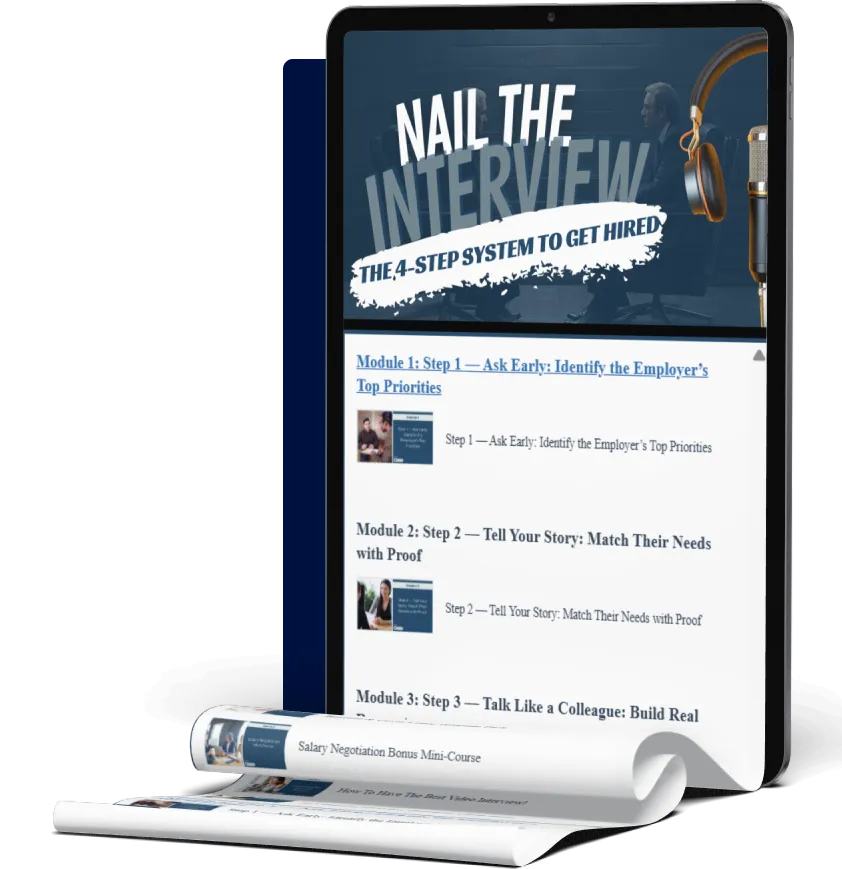
The Complete 4-Step Interview System
Step-by-step video training that walks you through the exact framework I've used to place candidates into six-figure positions for three decades.
You'll learn exactly how to focus the conversation from the opening moments, how to drill down when you get vague answers, how to match your experience to their stated needs, how to build genuine rapport that makes them want to work with you, and how to close confidently so they remember you long after you leave.
Phone screens are different from panel interviews, which are different from one-on-ones. Each requires a slightly different approach. I'll show you exactly how to navigate each scenario so you're never caught off guard.
You'll discover the Core Question Framework—not just what to ask, but what to do when they dodge it, how to handle interviewers who want to stick to their script, and how to pivot when the conversation goes off track.
This is the foundation. Everything else builds on these four steps.
Real Interview Scenarios & Applications
Theory is worthless if you can't apply it.
That's why you're getting Interview Roleplay Practice Videos where you'll watch real scenarios, see exactly how to apply the system in different situations, and practice until it becomes natural.
You'll see me walk through actual interviews—the good, the bad, and the ugly. You'll watch how to recover when you stumble. How to redirect when the interviewer goes off track. How to handle tough questions without panicking.
By the time you walk into your actual interview, you'll have rehearsed this multiple times. You won't be winging it. You'll know exactly what to do at every stage.
Resume & Cover Letter Template Pack (Bonus #1)
Your application needs to align with how you interview.
Most people write their resume as a list of responsibilities. "Managed projects. Led teams. Delivered results."
So does everyone else.
These templates show you how to position your experience around problems you've solved—so when the hiring manager reads your resume, they're already thinking "This person gets it."
Your resume, cover letter, and interview will tell one cohesive story. You'll stand out before you even walk in the room.
Salary Negotiation Mini-Course (Bonus #2)
I've watched too many people nail the interview, get the offer, then leave $15,000 to $25,000 on the table because they didn't know how to negotiate.
That's not happening to you.
This mini-course shows you exactly when to bring up salary, how to anchor the conversation in your favor, what to say when they ask about your current compensation, and how to confidently counter their first offer without sounding greedy or desperate.
You didn't go through this entire process to accept less than you're worth. This bonus ensures you get paid what you deserve.
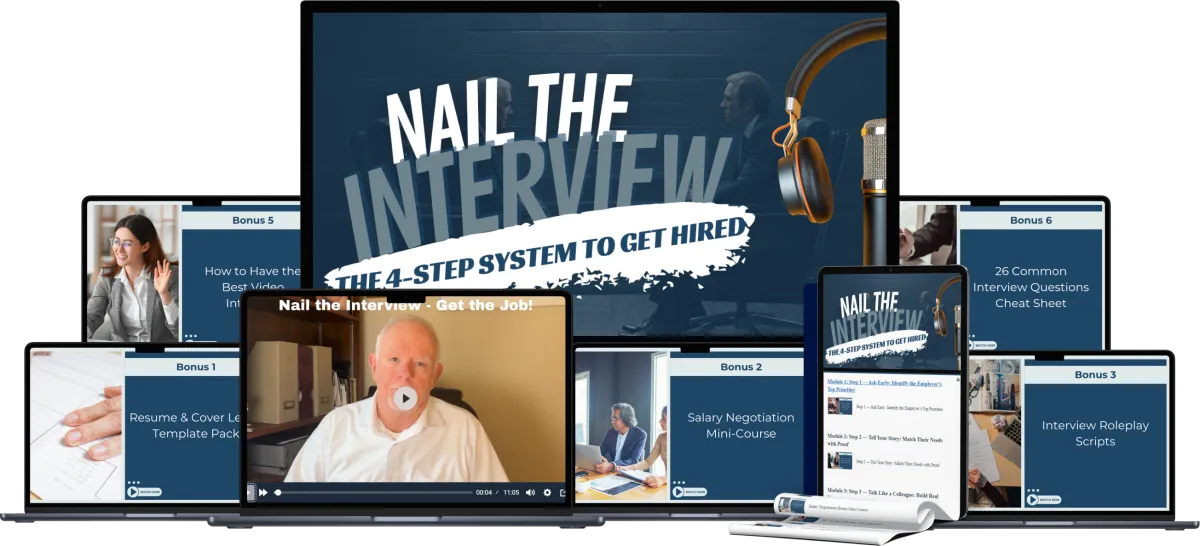
Everything You Get When You Enroll Today
The Complete 4-Step Interview System (Value $997) – Step-by-step video training breaking down exactly how to focus, position, connect, and close every interview with confidence
Interview Scenarios & Applications (Value $97) – Real roleplay practice videos showing you how to handle phone screens, panel interviews, one-on-ones, and tough questions
The Core Question Framework (Value $57) – What to ask, when to ask it, and how to handle interviewers who dodge or stick to scripts
Resume & Cover Letter Template Pack (Bonus #1, Value $47) – Position yourself as a problem-solver before you even interview
Salary Negotiation Mini-Course (Bonus #2, Value $97) – Never leave money on the table again. Get the compensation you deserve.
Total Value: $1,295
Your Investment Today:
Just $97
But Tom, I'm Not A Salesperson. I Don't Do This Kind Of... Strategic Interview Thing.
I hear this constantly.
Listen, I get it. You're good at your job. You became successful because you deliver results, not because you want to play interview games.
But what I'm teaching you isn't manipulation. It's clarity.
You're showing the hiring manager that you care about solving their actual business problem, not just collecting a paycheck. You're demonstrating that you think strategically about what matters.
Hiring managers love this approach. Know why? Because 90% of candidates just show up and regurgitate their resume.
Great. So does everyone else interviewing.
You're showing up to understand their pain point and prove you've solved it before. Completely different conversation.
Or maybe you're thinking: "What if they don't want me to take control like that? What if they just want to stick to their interview script?"
In 30 years of recruiting, I have never had a hiring manager refuse to tell a candidate what matters most for the role. Not once.
They want you to know. It makes their job easier. They're tired of interviewing people who don't get it.
Here's another one: "But what if the job description is accurate? What if all those requirements really do matter?"
They don't. Trust me.
Job descriptions are written by HR departments trying to cover every possible base. They throw everything in there.
But the hiring manager doing the interview? They've got three or four specific problems keeping them up at night. Those are the only things that matter.
Your job is to find out what those problems are, then prove you can solve them.
Real question: Can you afford not to try something different? If what you're currently doing isn't working, if you're getting rejected for roles you're qualified for, what do you have to lose?
Every Single Day You Wait Is Another Day Someone Else Lands The Position You Want
The job market is more competitive right now than it's been in years. More qualified candidates competing for the same roles. Hiring managers who can afford to be selective.
But here's your advantage: Most candidates have no idea how to interview effectively in today's environment.
They're going to walk into interviews and do what everyone does. List their skills. Mention their experience. Talk about their background. Then wait for the hiring manager to be impressed.
Hope their credentials speak for themselves.
Meanwhile, you're walking in with a proven core interview framework. You know exactly how to focus the conversation. You know how to position your experience. You know how to close confidently.
That's not a small advantage. That's the difference between "We'll be in touch" and "When can you start?"
I'm only releasing this system now because I'm stepping back from active recruiting. For 30 years, this has been my secret weapon. Every candidate I coached had an unfair advantage over everyone else interviewing for the same position.
That's why my placement rate was so high. That's why companies kept coming back to me year after year.
But I realized something: Why should only my candidates benefit? There are thousands of qualified professionals out there who are getting rejected not because they lack skills, but because they don't know how to communicate those skills effectively in an interview.
You might be one of them.
Those high-paying positions are still out there. Companies are still hiring.
Opportunities still exist.
But those offers are going to people who know how to interview. Not just people who are qualified.
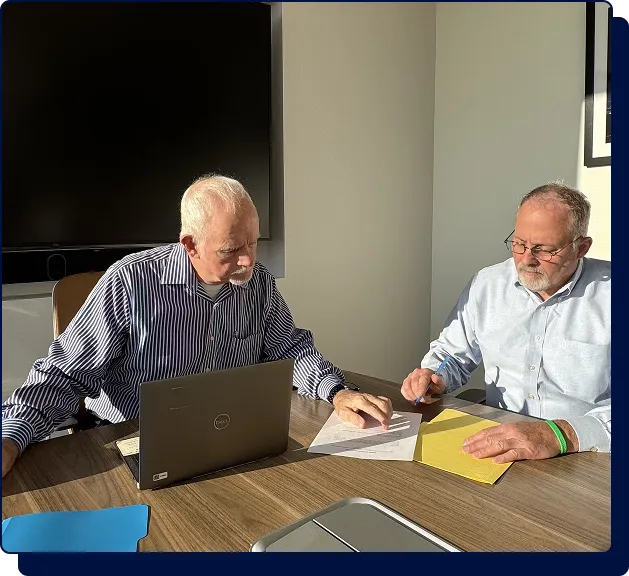
One Hour Of My Personal Coaching Normally Costs $500
When I was actively recruiting, companies paid me $20,000+ per placement to get candidates through interviews using this exact system.
This entire course with all the bonuses is $97.
Let me put that in perspective:
If this system helps you land a position paying even $60,000 instead of remaining unemployed for another month, you've made back your investment 600 times over.
If it helps you negotiate an extra $10,000 in salary, that's 100X ROI.
If it just saves you two months of interview stress and rejection, it's worth every penny.

I'm So Confident This Will Work That I'm Offering A Complete Money-Back Guarantee
Take the course. Apply the system in your next interview. If you don't feel more confident and in control, if you don't see a clear difference in how you interview, just ask for a refund. No questions asked.
But here's what you need to understand: Your next interview could be next week. Or tomorrow. You cannot cram confidence the night before.
You need to learn this system, internalize it, practice it before you're sitting across from a hiring manager for an important opportunity.
That interview for your next great position isn't going to wait for you to figure this out.
Your confidence will be strong once you have core interview framework skills.

Try It Risk-Free –
100% Money-Back Guarantee
If you don’t feel a significant reduction in your anxiety after completing the course, I’ll give you a full refund, no questions asked. You have 30 days to see results, or your money back.
Is This For You?
This IS For You If...
You're ready to build a real brand, not just another generic fashion label
You want to create something meaningful that customers actually connect with
You're willing to put in the work during the first 6 weeks to set up your foundation
You believe in providing genuine value and building emotional connections
You're coachable and ready to follow a proven system
You want to leverage brand meaning instead of competing on price
You're excited about building a brand with lasting cultural impact
You have creative vision but need clear direction
You're tired of watching others succeed while sitting on the sidelines
You understand that success requires implementation, not just information
This is NOT For You If...
You're looking for a "get rich quick" scheme with zero effort
You want to build a cheap product line with no brand meaning
You're not willing to invest time in the first 6 weeks to set up properly
You prefer to "figure it out yourself" rather than follow proven systems
You're looking for overnight success without putting in the work
You're not interested in building a real, sustainable brand
You're not willing to learn and adapt as the market changes
You want to cut corners and compromise on quality
You're not ready to take action and implement what you learn
Stop Hoping Your Qualifications Will Speak For Themselves
Stop walking out of interviews thinking "I have no idea if I got that."
Start controlling the conversation. Start getting offers.
Your next opportunity is out there right now.
Click below to get instant access to "Nail The Interview, Get The Job: The 4-Step System."
Let's get you hired.
© 2025 Nail The Interview, Get The Job. All Rights Reserved.
For questions and concerns, please email [email protected]